

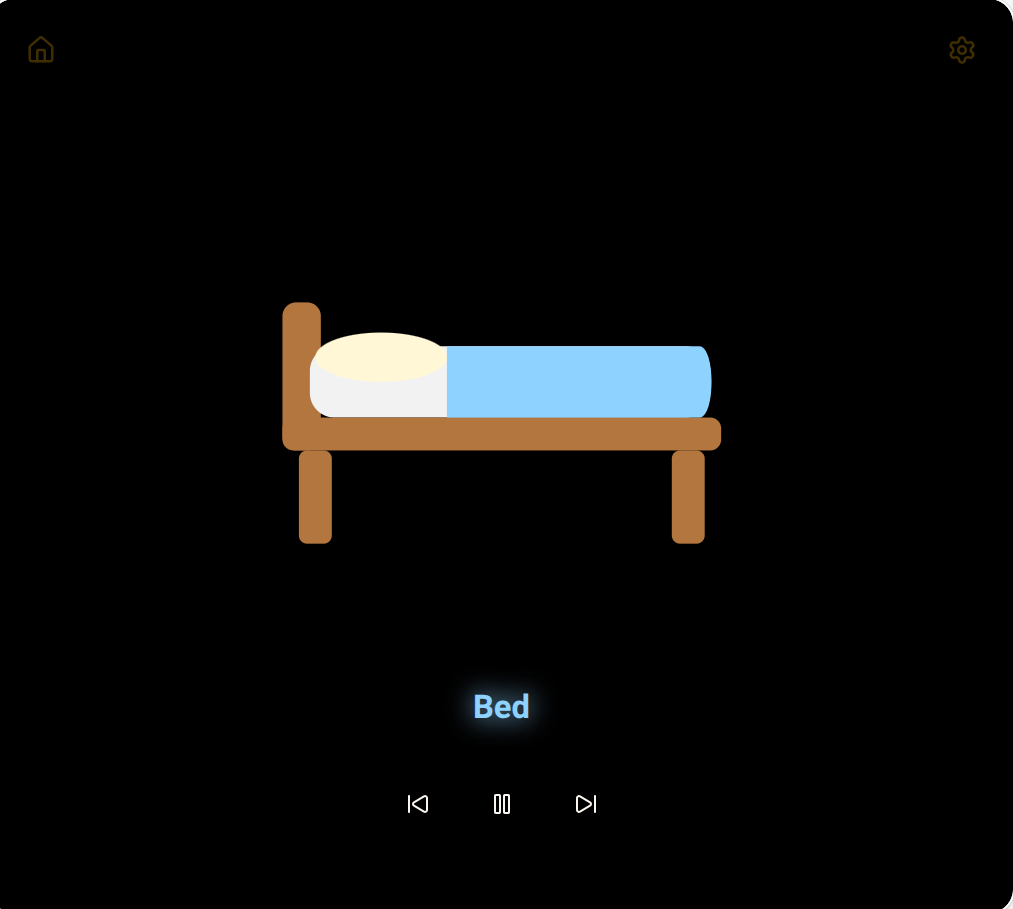
Practice
Meet the Objects
Explore the familiar objects and characters that appear in the story. Objects are presented individually, giving learners an opportunity to notice, attend to, and recognize pictures without following the entire story.
Glow Stories
A missing sock. A little mystery. A lot of looking.
Two little socks are a perfect pair—until one suddenly disappears! Follow the remaining sock as it searches familiar places, discovers a few surprises, and finally finds its missing friend.
or included in the membership
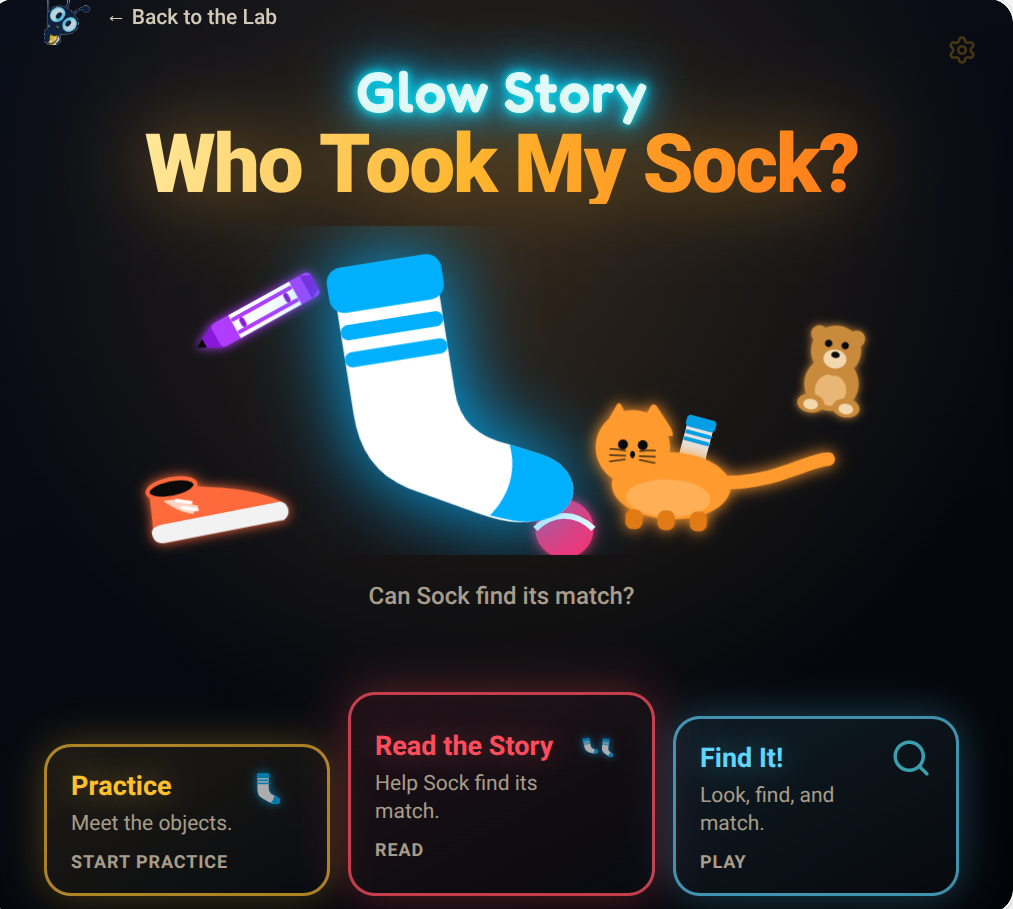
Who Took My Sock? is a playful animated picture book created for learners who benefit from simpler, more accessible visual experiences.
The story begins with two matching socks. One suddenly disappears, leaving the other to search for its missing partner.
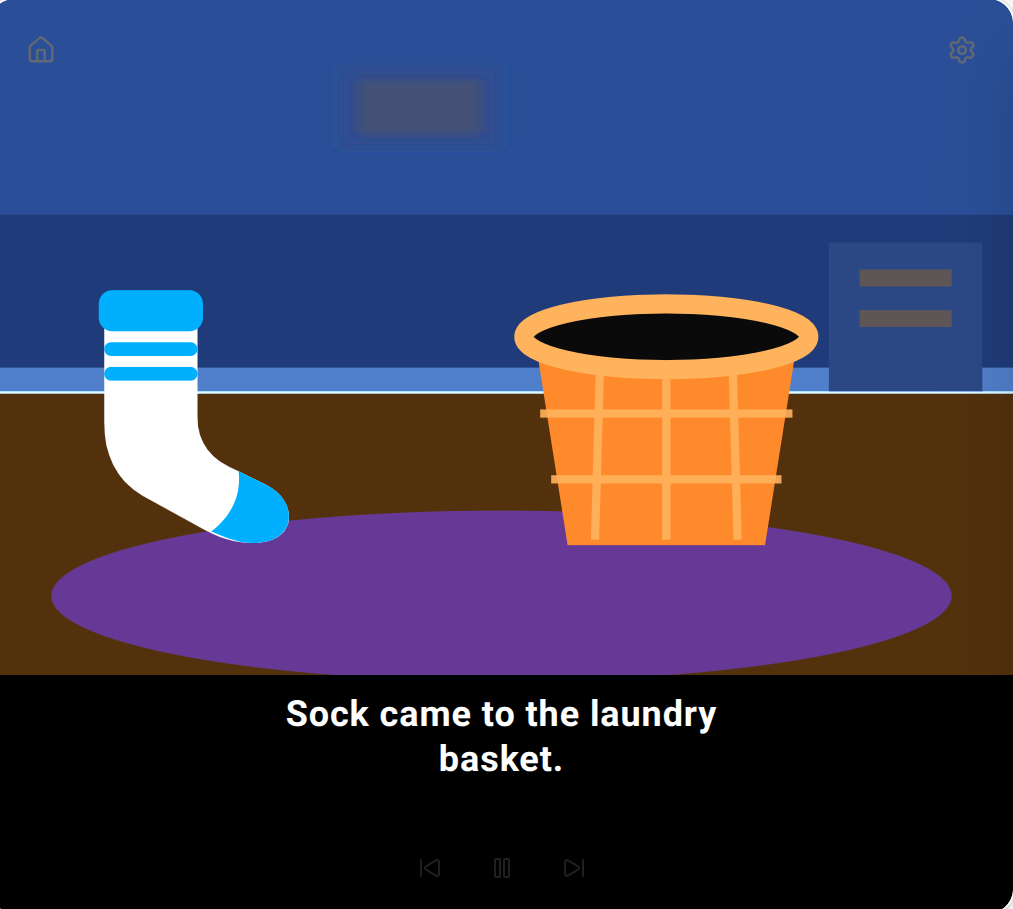
Is it in the shoe? The laundry basket? Under the bed? Each new place brings another surprise—and another opportunity to look, wonder, and anticipate what comes next.
With familiar objects, simple movements, repeated language, and a little humor, the story encourages visual attention, recognition, and shared enjoyment.
And, of course, there's a cat. Cats are often suspicious in situations involving missing socks.
Meet the Objects
Explore the familiar objects and characters that appear in the story. Objects are presented individually, giving learners an opportunity to notice, attend to, and recognize pictures without following the entire story.
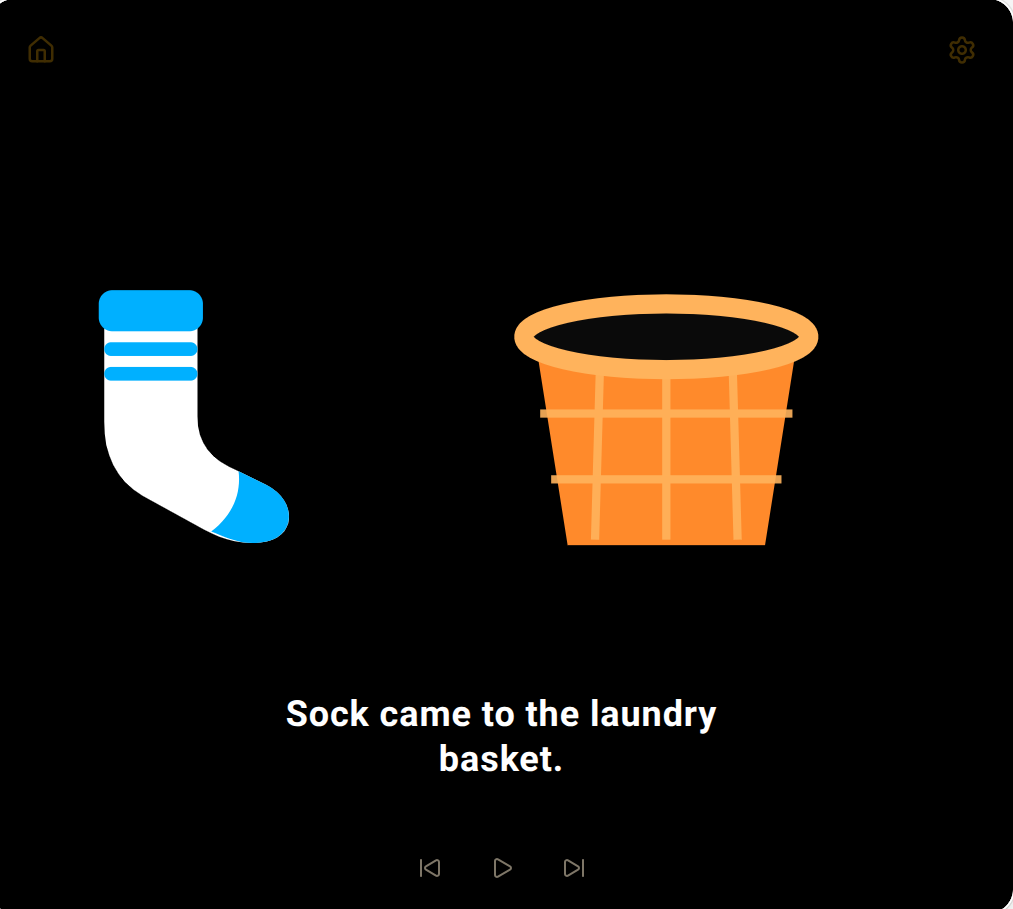
Help Sock Find Its Match
Follow Sock's search through familiar places, with narration, movement, repetition, and surprises. Adjustable pacing and visual presentation allow adults to tailor the experience to the learner.
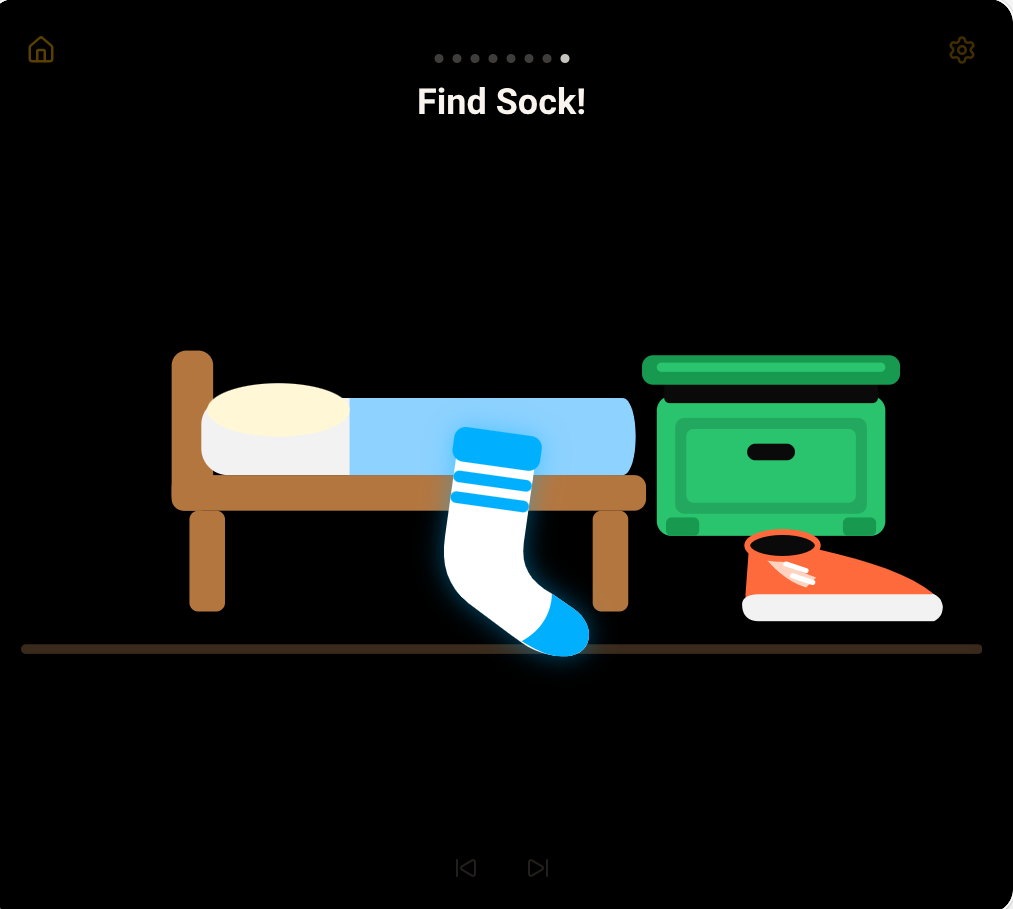
Look, Find, and Match
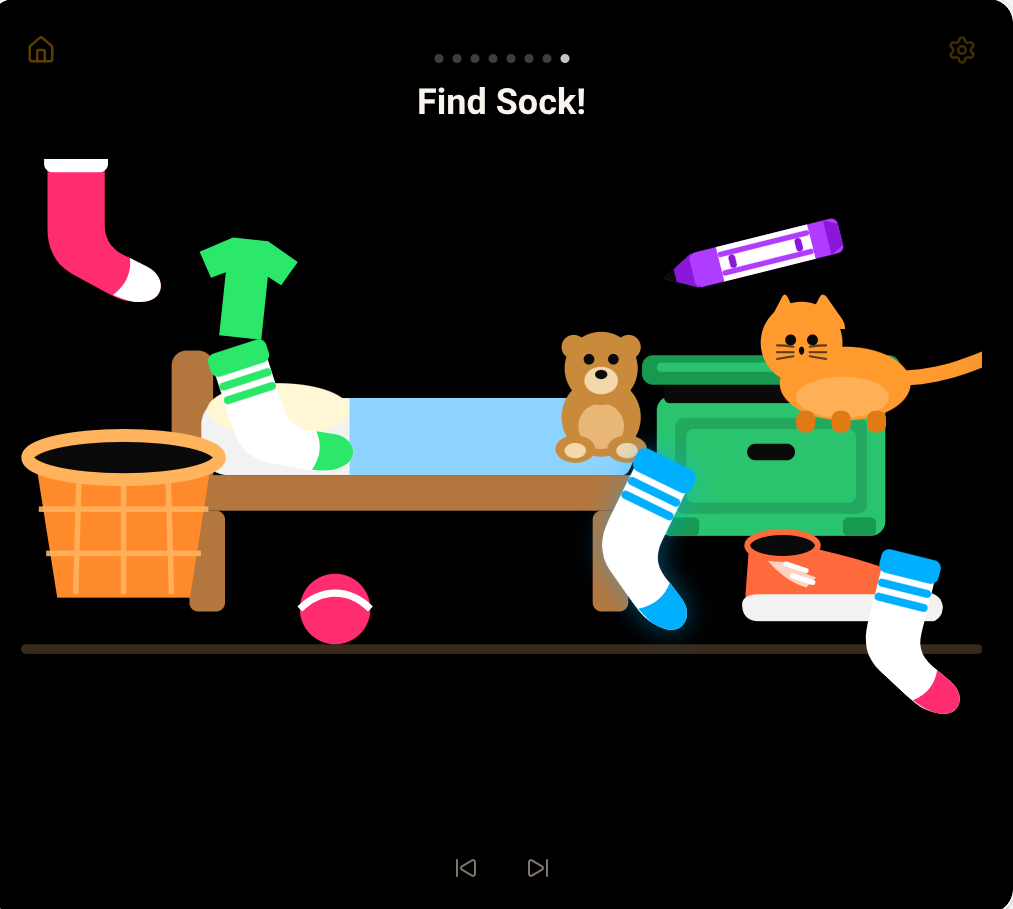
A playful visual search activity using familiar objects from the story. Learners look for Sock among other pictures, with adjustable visual complexity to support different levels of visual search.
Not every learner needs the same amount of visual information.
Who Took My Sock? allows adults to adjust the complexity of the pictures. Begin with familiar objects isolated against black, or gradually introduce background details to create a more complete scene.
The story and its characters remain the same. Only the amount of surrounding visual information changes.
This makes it possible to find an accessible starting point and experiment with different levels of visual complexity as the learner becomes more familiar with the pictures.
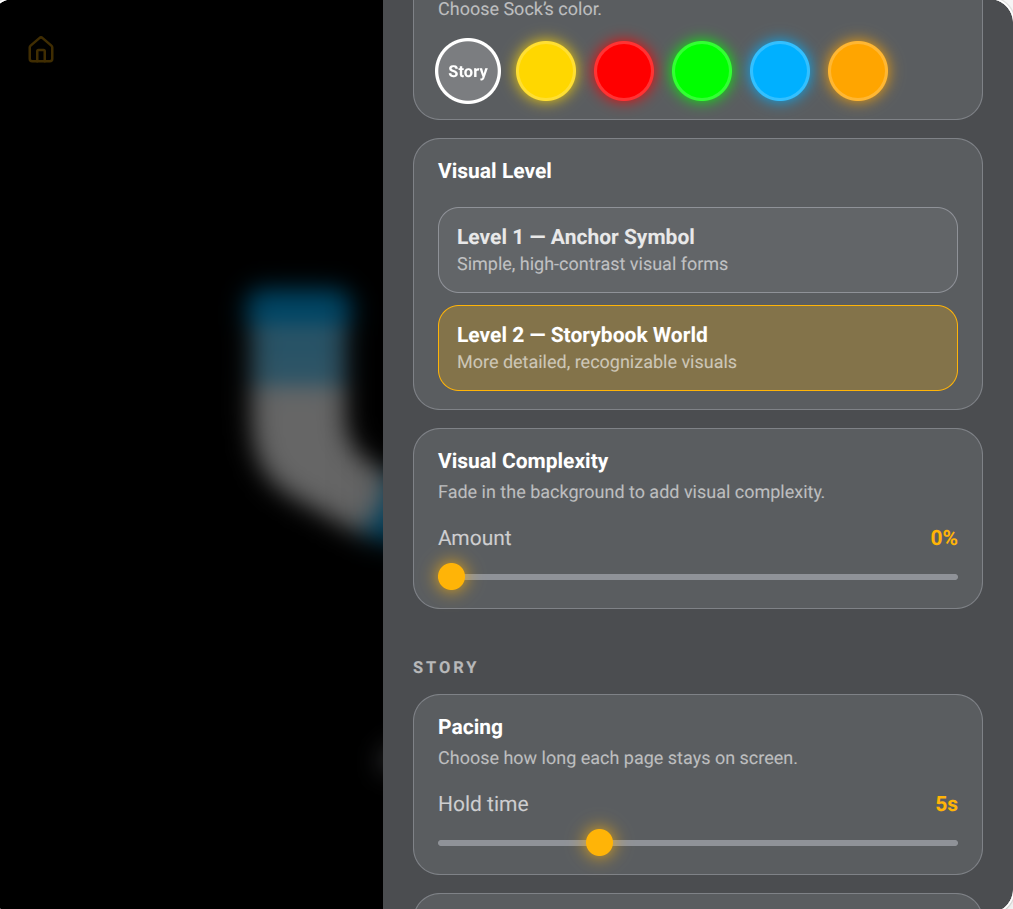
Who Took My Sock? includes settings that help adults adjust the experience for different learners and situations.
Visual complexity can be increased or decreased. Pacing can be adjusted to give learners more time to look. Familiar characters, predictable movement, and repeated discoveries help make the story understandable and enjoyable.
The goal isn't to make every learner experience the story in the same way. It's to provide an easier way in.
Notice and attend to a picture or moving character.
Become familiar with everyday objects such as shoes, clothing, toys, and household items.
Look for a familiar object and distinguish it from other pictures.
Recognize the repeated search-and-discovery pattern.
Watch Sock slide, peek, hop, and move between locations.
Enjoy surprises, anticipate discoveries, and interact with another person during the story.
These aren't separate lessons or tests. They're opportunities woven into a simple story.
Meet the objects first. Start with Practice to explore a few of the pictures before reading.
Wonder what comes next. Pause before a discovery and give the learner time to look, anticipate, or respond.
Bring the story into the room. Use a real sock, shoe, teddy bear, or laundry basket to connect the pictures to familiar objects.
Read it again. Repetition helps make pictures and story events familiar. A second or third reading may offer new opportunities to notice and participate.
Who Took My Sock? was created with learners with CVI, visual impairments, and complex learning needs in mind—but it isn't only for them.
It's a little story about familiar places, funny surprises, and finding a friend.
Sometimes the most important part isn't what happens on the screen. It's the shared moment when someone recognizes the cat, anticipates the surprise, or laughs at the missing sock.
or included in the membership
An interactive Glow Story from Active Looking Lab.