Back to the App Library

Learn to look

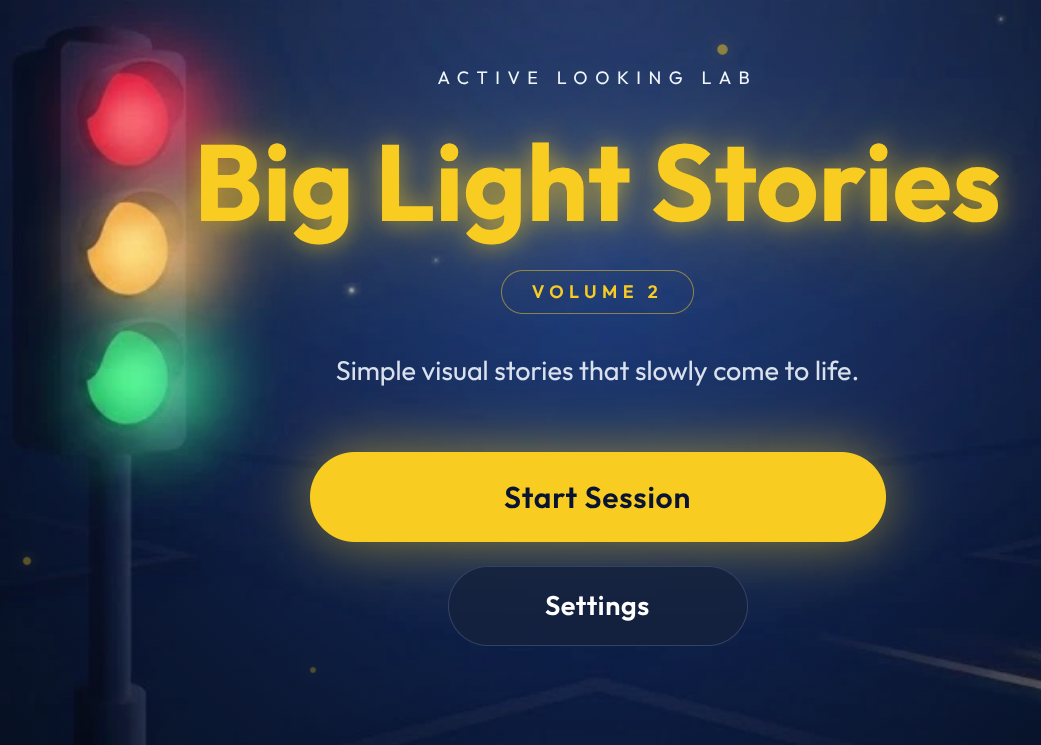
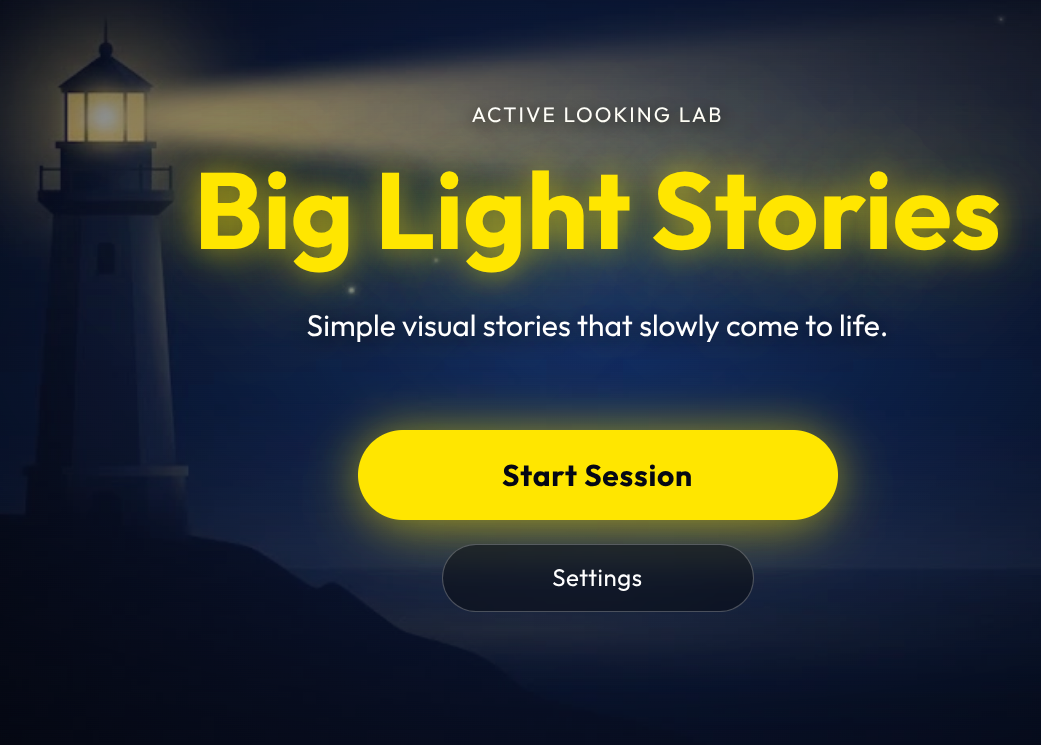
Big Light Stories

Simple visual stories that slowly come to life.

Big Light Stories begin with something simple.

A glowing light. A bright shape. A little movement against the darkness.

Then something happens.

A lighthouse sends its beam across the water. Fireflies begin to glow. A traffic light changes color. A train approaches a crossing.

Each little story unfolds through light, color, movement, and change.

They're designed for learners who benefit from clear visual targets, predictable events, and time to notice what's happening.

And they're made to be enjoyed together.

Explore the Stories

You picked

Big Light Stories Volume 2 cover

Volume 2 — Lights in Everyday Life

Familiar lights, moving objects, and little surprises.

Included with the membership ($36/year)

Or see both volumes ↓

Start with something clear. Let the story grow.

Big Light Stories were created around a simple idea: a whole scene doesn't need to appear at once.

Sometimes a learner benefits from beginning with one clear visual target.

A bright light or familiar shape appears against a dark background. As the story unfolds, additional movement and visual information help reveal what is happening.

A light sweeps across the water. A signal changes. A train rolls by. A tiny firefly begins to glow.

The experience develops through a sequence of visual events rather than presenting everything at once.

This gives learners opportunities to notice, follow, anticipate, and recognize what is happening as the scene comes to life.

"A little light. A little movement. A story begins."

What makes Big Light Stories different?

A Clear Starting Point

Each story begins with a strong visual target or recognizable event, helping establish where to look.

Gradual Visual Discovery

The scene develops through movement, light, and additional visual information rather than appearing all at once.

Multiple Visual Presentations

The stories offer different visual styles or levels, allowing adults to choose an appropriate amount of visual detail.

Light, Color, and Movement

Bright colors, glowing objects, and carefully controlled movement help make the events noticeable.

Adjustable Presentation

Available settings allow adults to adapt aspects of the visual and storytelling experience, including visual style and other supported controls.

Shared Enjoyment

The stories provide opportunities to watch, anticipate, recognize, and enjoy events together.

Anchor. Bridge. Meaning.

  1. 1.

    Anchor

    Something clear to notice

    Begin with a strong visual target that helps establish where to look.

  2. 2.

    Bridge

    A little more information

    Movement, light, and additional visual details gradually reveal what is happening.

  3. 3.

    Meaning

    A recognizable event emerges

    The pieces come together into a familiar object, action, or simple story.

This isn't a required learning sequence or a test. It's a way of creating stories that begin with accessible visual information and gradually build toward something meaningful.

Explore the two volumes

Big Light Stories Volume 1 cover

Volume 1

Light in the Natural World

Little lights, quiet discoveries, and changing scenes.

Volume 1 explores light and movement through atmospheric visual stories.

A lighthouse sweeps its beam across the darkness. Fireflies glow in a jar. Fish move through an aquarium, and the night sky comes to life.

Each experience begins with clear visual information and gradually develops into a recognizable scene.

The stories offer opportunities to watch movement, follow light, recognize familiar objects, and anticipate what happens next.

Stories included

  • Night SkyA quiet nighttime scene built around glowing light and visual changes in the sky.
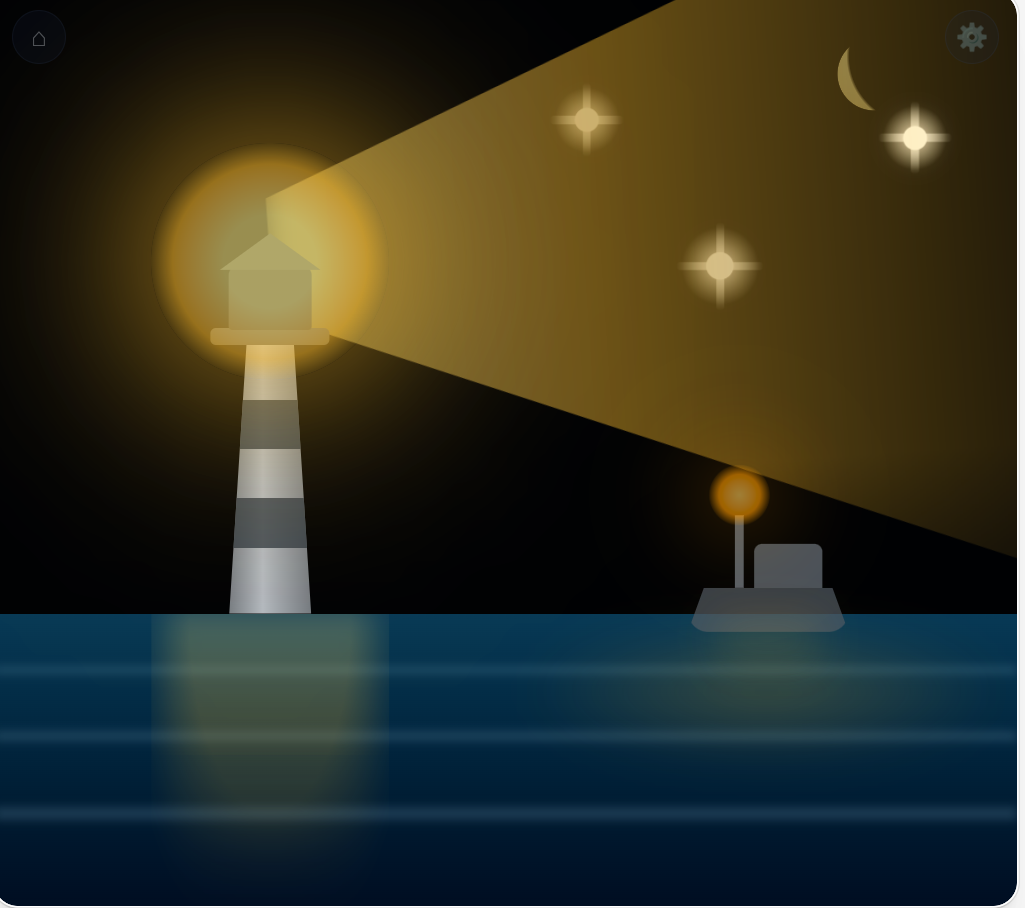
  • LighthouseA lighthouse shines across the water, with a moving beam of light and a developing coastal scene.
  • FirefliesTiny glowing fireflies become the focus of a simple nighttime visual experience.
  • AquariumAn underwater visual story featuring fish and gentle movement.
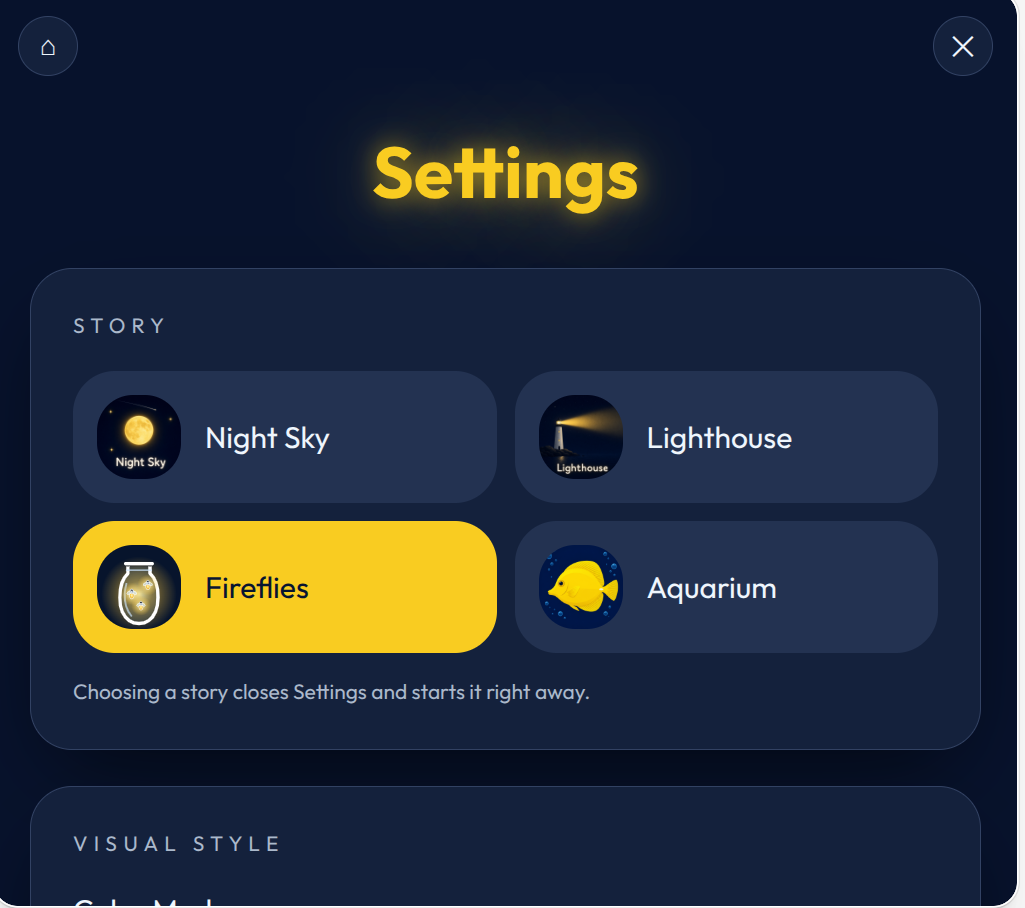
Volume 1 story choices: Night Sky, Lighthouse, Fireflies and Aquarium.

Included with the membership ($36/year)
Big Light Stories Volume 2 cover

Volume 2

Selected

Lights in Everyday Life

Familiar lights, moving objects, and little surprises.

Volume 2 explores familiar objects and events through light, color, movement, and change.

A traffic light changes from red to green. A train signal flashes as a train approaches. A washing machine tumbles colorful shapes, and a little firefly lights a row of lanterns.

The stories use recognizable events and predictable sequences to create opportunities for looking, following, anticipating, and shared enjoyment.

Stories included

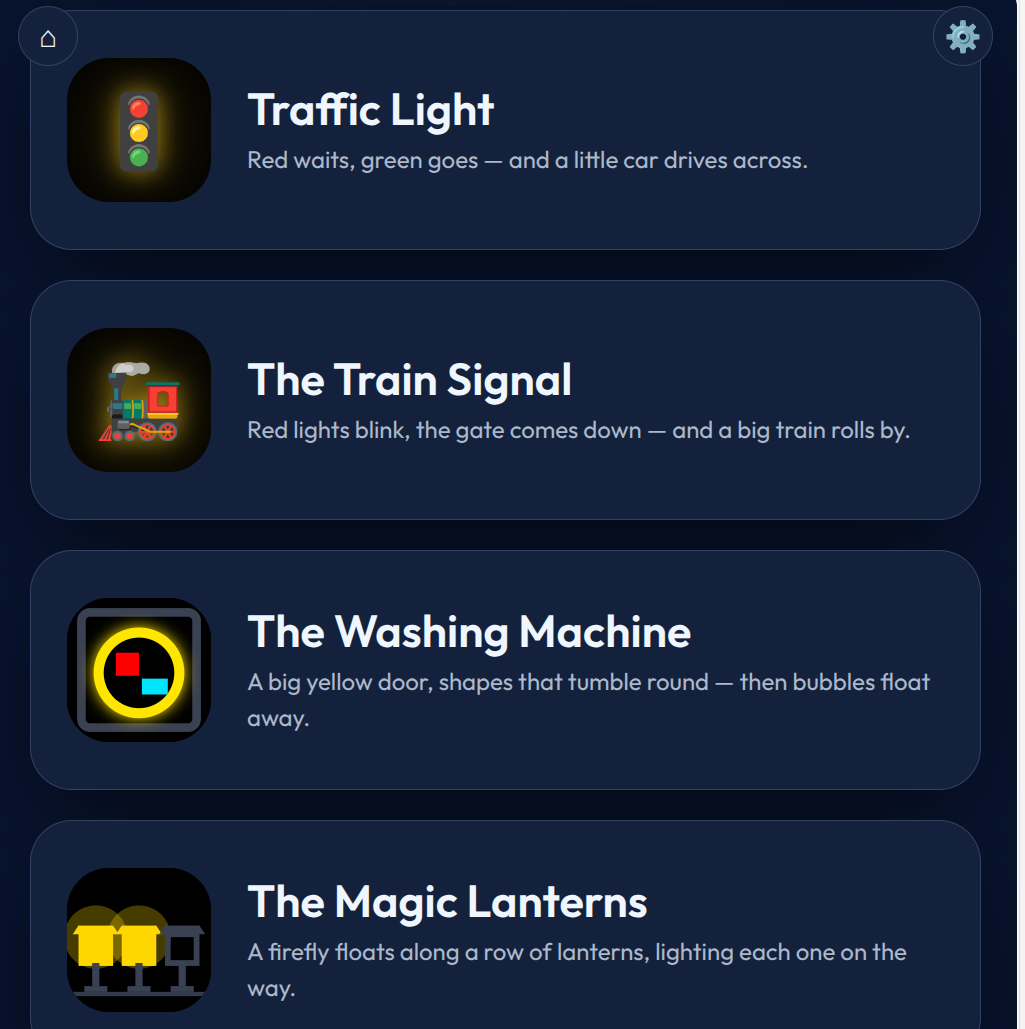
  • Traffic LightRed waits, green goes—and a little car drives across.
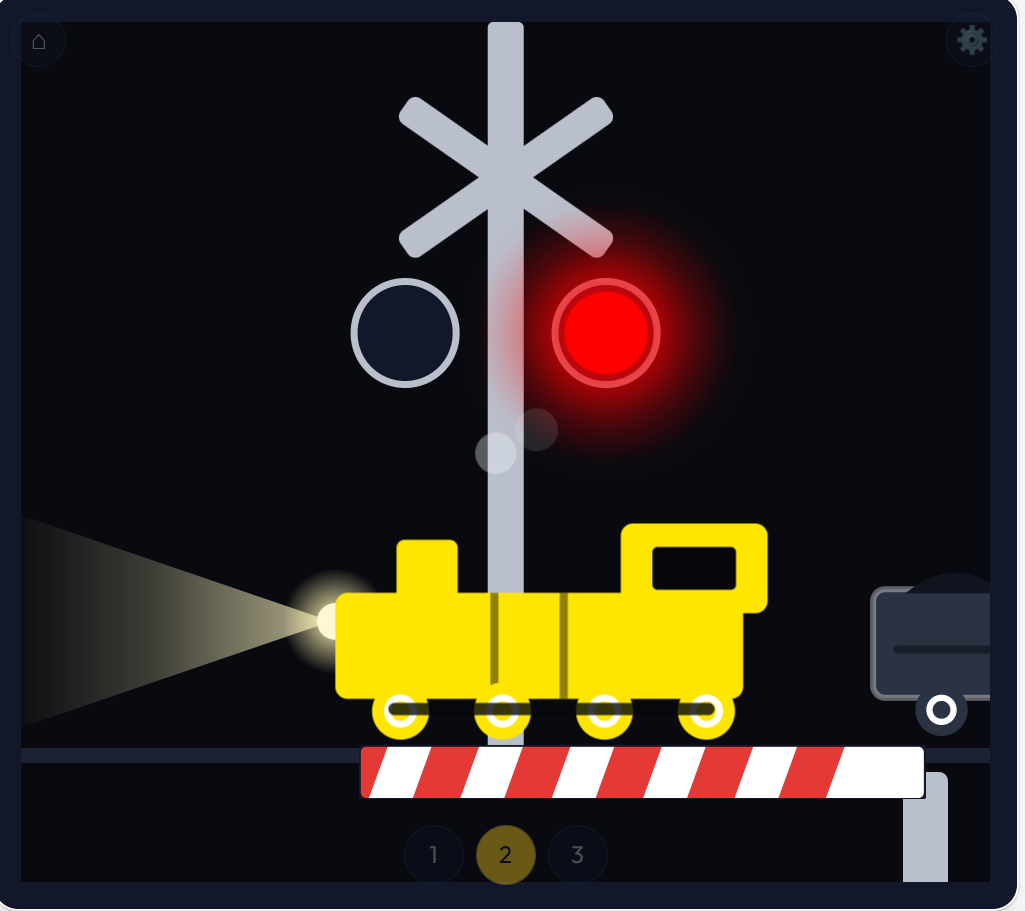
  • The Train SignalRed lights blink, the crossing gate comes down, and a train rolls past.
  • The Washing MachineA bright circular door frames colorful shapes tumbling around before bubbles float away.
  • The Magic LanternsA firefly travels along a row of lanterns, lighting each one as it passes.
Volume 2 story menu listing Traffic Light, The Train Signal, The Washing Machine and The Magic Lanterns.

Included with the membership ($36/year)
A few moments from Big Light Stories

Lighthouse on a dark coast sending a golden beam across the sky toward a small boat.
Light to FollowA lighthouse beam sweeps across the nighttime water.
Railway crossing with a glowing red light, striped gate lowered and a yellow train passing.
Something Is ComingA train crossing signal introduces a sequence of lights, movement, and anticipation.
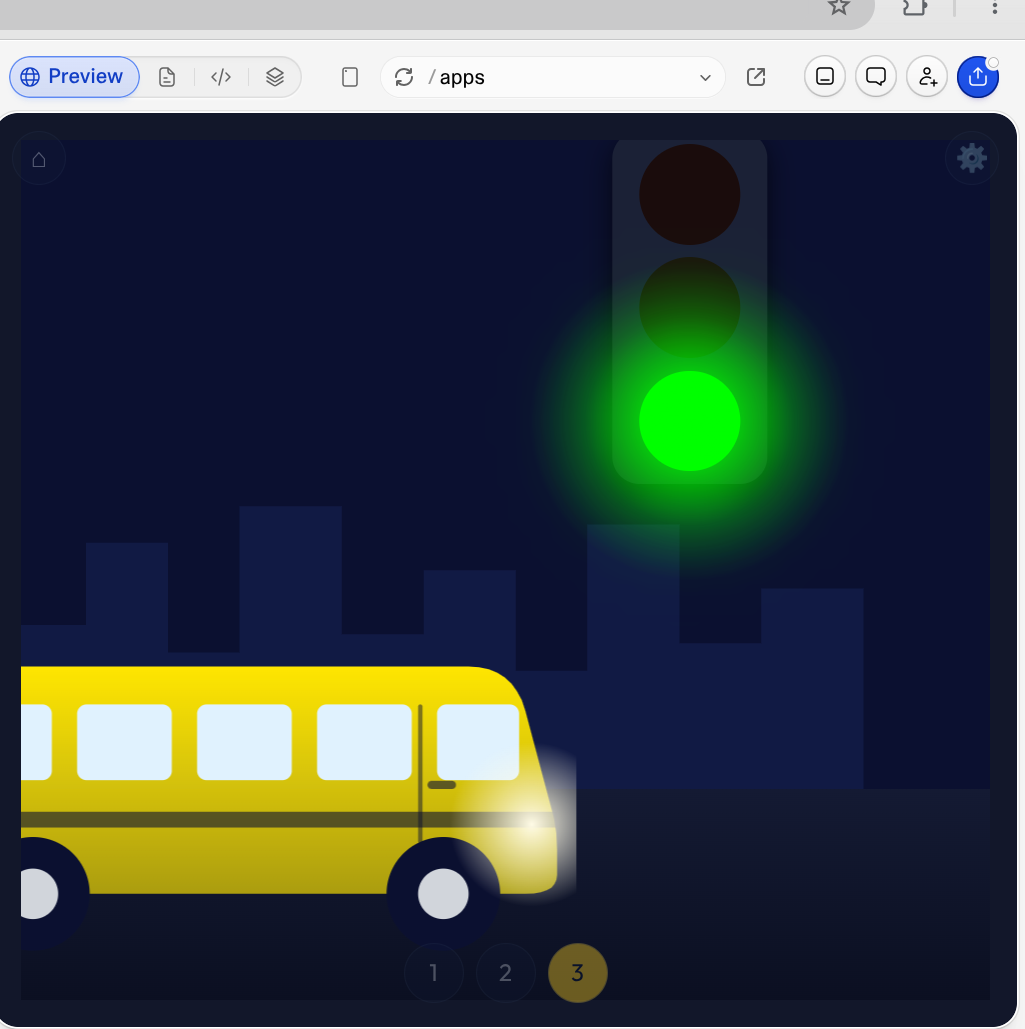
Traffic light glowing green as a yellow school bus drives past a dark city skyline.
Red, Yellow, GreenFamiliar traffic lights provide clear visual targets as the scene changes.
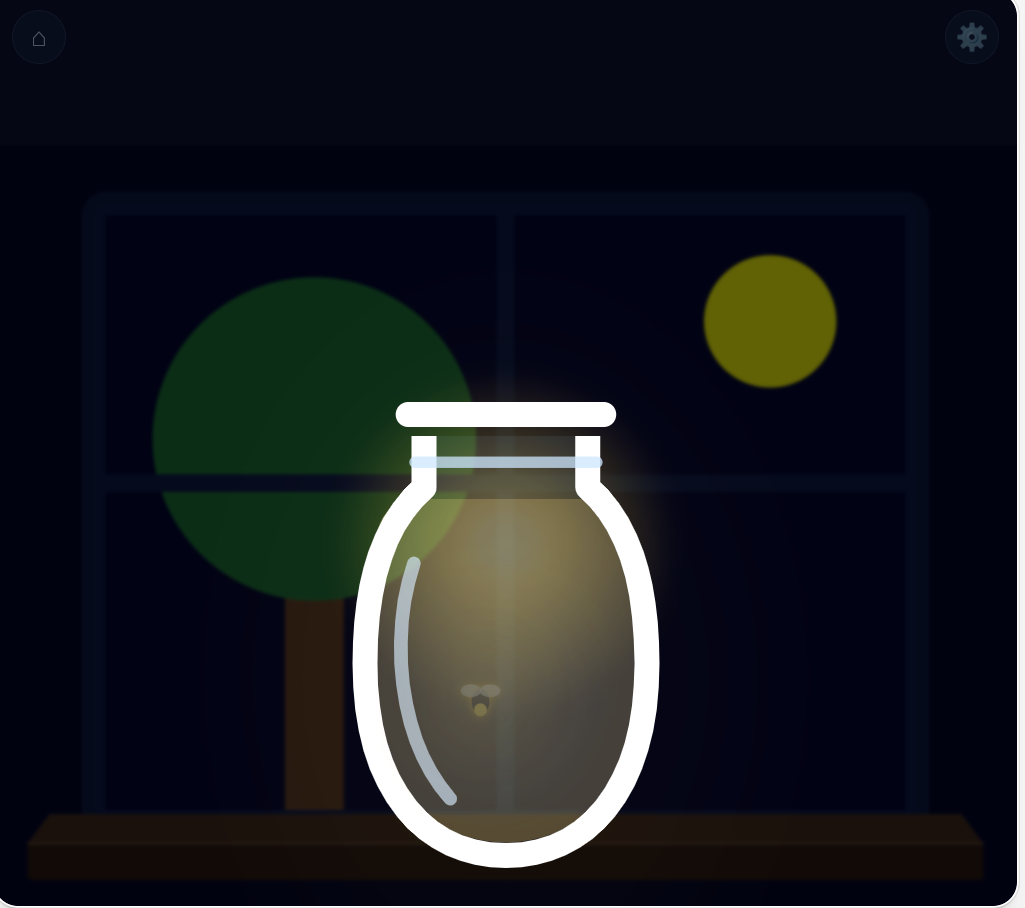
A glass jar with a softly glowing firefly in front of a dark window.
A Little GlowSmall lights become the focus of a quiet nighttime scene.

Different ways to experience the same story.

Big Light Stories offer different visual presentations of familiar events.

A simpler presentation can emphasize large shapes, strong contrast, and essential visual information.

More detailed presentations introduce additional recognizable features and surrounding context.

The story remains familiar while the amount and type of visual information change.

This allows adults to explore different presentations and choose what seems most accessible and engaging for the learner.

Little stories, lots of opportunities to look.

Visual Attention

Notice and attend to a bright object, light, or event.

Following Movement

Watch a beam, vehicle, light, or object move across the screen.

Anticipation

Become familiar with predictable sequences and begin to expect what happens next.

Recognition

Connect clear visual forms with familiar objects and events.

Noticing Change

Watch lights turn on, colors change, and scenes gradually develop.

Shared Participation

Enjoy the unfolding events with another person.

These aren't separate lessons or tests. They're opportunities woven into simple stories.

Let the story come into view.

  • Start simply

    Choose a visual presentation that provides a clear, comfortable starting point.

  • Give it time

    Allow the learner to notice the first visual target before moving through the sequence.

  • Watch for anticipation

    Predictable changes—such as a light changing color or a train approaching—provide opportunities to wonder what will happen next.

  • Share the experience

    Watch together, react to discoveries, and enjoy familiar events.

  • Return to a favorite

    Repeating a story may provide new opportunities to notice, recognize, and participate.

Sometimes a little light tells the whole story.

Big Light Stories were created for learners who may need a simpler way into visual storytelling.

They begin with something clear, add a little movement, and gradually reveal something familiar.

A light appears. Something changes. A story begins.

And sometimes recognizing what's happening is the best part.

Included with the membership ($36/year)
Explore the Volumes